
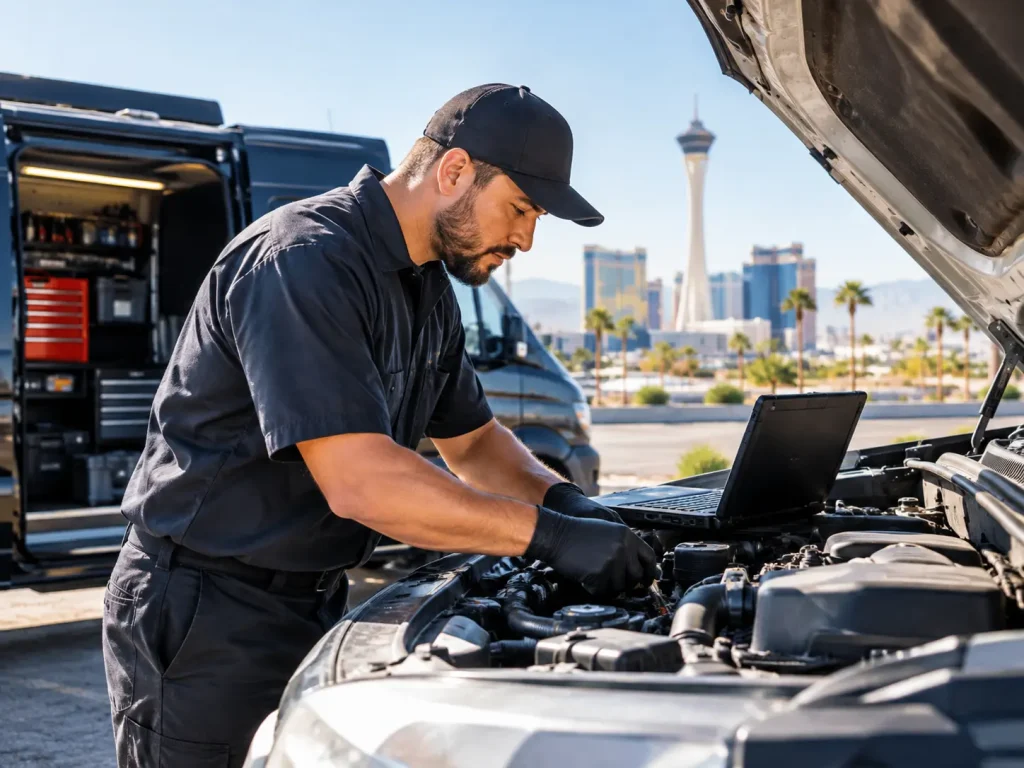
In Portland, rain is not an occasional event. It is a season. From autumn through spring, gray skies, steady drizzle, and heavy downpours turn roads slick, windshields blurry, and drives longer. Many cars handle summer without complaint and then show their weak spots the first week the rain returns. Worn wiper blades smear instead of clearing, tires lose their grip on wet pavement, and a weak battery struggles on cool, damp mornings. The good news is that a short checklist done before the rain sets in can make wet weather driving safer and far less stressful. This guide covers what to check, why each item matters, and how a mobile mechanic can handle things like wiper blade replacement in Portland and other rainy season prep at your home or workplace.
Why Rainy Season Is Hard on a Car
Water changes how a car behaves. It reduces tire grip and increases stopping distances, it hides road hazards and lane markings, and it lets dirt and spray cling to the glass. Constant moisture also encourages corrosion, wears out rubber, and strains electrical connections. Cooler temperatures put extra load on the battery, and fogged windows demand attention from the defrosting system. A car that is only slightly worn in dry weather can become unsafe in the wet, which is why the checklist below begins with the parts that matter most for traction and visibility.
Item One: Wiper Blades
Wipers are the first line of defense in a downpour. The rubber blade hardens, cracks, and warps over time, especially after a dry, sunny summer, and a worn blade leaves streaks, smears, or unwiped patches right where you are looking. Signs that your wipers need to be replaced include:
- Streaking or smearing across the glass
- Chattering, skipping, or squeaking as they move
- Unwiped bands or patches
- Visible cracks, splits, or peeling in the rubber
- A bent or damaged frame, or a blade that does not press evenly on the glass
Blades are made for specific vehicles, so use the size and type your owner’s manual or a parts guide lists. Many drivers replace blades about once a year, and the rainy season is a good time to do it. Do not forget the rear wiper if your car has one. Wiper blade replacement is a quick job with a big safety benefit, and a technician can often do it in minutes.
Item Two: Washer Fluid and Spray Nozzles
Road spray leaves a film of dirt and oil on the windshield, and wipers alone cannot always clear it. Make sure the washer reservoir is full, and use a fluid made for the purpose, not plain water, since it cuts the film and helps in cold weather. Check that the nozzles spray in the right place and are not clogged. A small pin can clear a blocked nozzle, and a technician can adjust or replace nozzles that do not work properly.
Item Three: Tires and Tread
Tires are your only contact with the wet road, so they deserve the most attention. Tread channels water out from under the tire, and as the tread wears down, the tire loses its ability to do that. The result can be hydroplaning, where the tire rides on a layer of water and you lose steering and braking control. Check:
- Tread depth, since worn tires lose wet grip quickly
- Pressure on all four tires, and the spare, when the tires are cold
- Sidewalls for cracks, bulges, or cuts
- Uneven wear, which can point to alignment or suspension trouble
- The age of the tires, because rubber hardens over time even when the tread looks fine
Use the pressure listed on the label inside the driver’s door jamb or in your owner’s manual, not the number printed on the tire. If your tires are worn, replace them before the heavy rain arrives. A tire professional can also tell you whether your tire type suits the weather you drive in.
Item Four: Brakes
Wet roads make stopping harder, so you want your brakes in good shape. Moisture can also leave a thin film of rust on rotors, which usually wipes away after a few stops, but a car that sits for days in damp conditions can develop more serious corrosion. Pay attention to squealing, grinding, a soft pedal, pulling to one side, or vibration when stopping, and have any of these inspected. Our article on rainy season driving and why Portland cars need more frequent brake checks explains why wet weather is hard on brakes and what to watch for. Brakes are a safety system, so when you are not sure, have them looked at.
Item Five: Lights
You need to see and be seen, and gray rainy days make that harder. Check that your headlights, low beams, high beams, brake lights, turn signals, hazard lights, and fog lights, if you have them, all work. Look at the headlight lenses, since cloudy or yellowed plastic reduces output. Clean the lenses, and replace any bulbs that are dim or burnt out. Many cars also have daytime running lights, but they may not light the rear of the car, so turn on the headlights in rain so your taillights come on too, as local law and your owner’s manual direct.
Item Six: Defroster, Heater, and Air Conditioning
Fogged windows are one of the most common rainy season annoyances, and they can be dangerous. The defroster and the air conditioning both help clear moisture from the glass, and the air conditioning compressor dries the air even in cool weather. Test the front and rear defrosters, and check that air flows well from the vents. A musty smell or weak airflow can mean a clogged cabin air filter, which also makes fogging worse. Keeping the inside of the glass clean helps too, since dirt gives moisture something to cling to.
Item Seven: The Battery
Cooler, damp weather puts more demand on a battery. Headlights, wipers, defrosters, and heated seats all draw power, and a weak battery may struggle to keep up. Signs of trouble include slow cranking, dim lights, a battery or charging warning light, corrosion on the terminals, and an age of several years. A quick test can tell you how much life is left. If your car does not start, our guide to the top 10 reasons your car won’t start and how to get back on the road goes through the common causes.
Item Eight: Leaks, Seals, and Drains
Water finds its way into places it should not. Check the door and window seals for cracks or gaps, and look for damp carpets or a musty smell, which suggest a leak. Many cars have drain channels around the sunroof, the cowl below the windshield, and the doors, and leaves and debris can clog them. A blocked drain can send water into the cabin or into electrical parts. Keep the areas near the windshield clear of leaves and needles, and clear the drains if you can reach them. A technician can help find the source of a stubborn leak.
Item Nine: Fluids and Belts
Cooler weather does not mean you can skip the basics. Check the engine oil, coolant, brake fluid, and power steering fluid, following the method in your owner’s manual. Look at the belts and hoses for cracks or fraying. Wet roads can splash water and grit onto parts in the engine bay, so a clean, dry bay and sound belts help avoid problems. Follow the service intervals in your manual, and ask about the severe service schedule if your driving is mostly short trips or stop and go traffic.
Item Ten: Underbody and Corrosion
Persistent moisture speeds up rust, especially on the underbody, brake lines, exhaust parts, and any spot where paint is chipped. Wash the car regularly, and take care of chips and scratches before moisture gets under the paint. Moss and algae can grow on rubber seals and in damp crevices if the car is parked under trees, so keep seals clean and dry. A technician can inspect the underside for early corrosion.
Item Eleven: An Emergency Kit
- A flashlight with extra batteries
- Jumper cables or a portable jump starter
- A phone charger and a charged phone
- A rain poncho or jacket, a towel, and a blanket
- Water and non perishable snacks
- A tire pressure gauge, a basic tool kit, and the spare tire tools
- Reflective triangles or flares
- A basic first aid kit
Wet Weather Driving Habits
A well prepared car still needs a careful driver. Slow down, and leave much more room between you and the car ahead, since stopping takes longer on wet pavement. Avoid sudden braking or steering, and ease off the gas if you feel the car start to float. Be extra careful in the first minutes of rain, when oil and dirt on the road mix with water and make a slick surface. Never drive through flooded roads, because even shallow water can stall an engine or hide damage, and it takes less water than most people think to move a car. Turn on your headlights, and turn around if conditions become unsafe.
A Quick Rainy Season Checklist
- Wiper blades replaced if they streak, skip, or crack
- Washer fluid full, with clear nozzles
- Tires with good tread, correct pressure, and no damage
- Brakes quiet and responsive
- All lights working, with clear lenses
- Defroster, heater, and air conditioning working
- Battery tested and terminals clean
- Seals intact, drains clear, and no leaks
- Fluids, belts, and hoses in good shape
- Emergency kit stocked
Can a Mobile Mechanic Help With Rainy Season Prep?
In many cases, yes. A mobile mechanic can come to your home or workplace in the Portland area, replace wiper blades, test the battery and charging system, inspect the tires, brakes, belts, hoses, lights, and fluids, and handle many common repairs on site. That saves you a trip to a shop in the rain. Some jobs, such as tire replacement that needs a mounting machine, major brake work, or repairs that need a lift or specialized equipment, may need a full shop, and a trustworthy technician will tell you honestly when that is the case. When you book, share your vehicle’s year, make, model, and mileage, and mention anything you have noticed, such as streaking wipers, foggy windows, or slow starts.
Get Ready Before the Rain Settles In
Preparing for the rainy season takes a little time, and it pays off every gray, wet day for months. A fresh set of wipers, good tires, solid brakes, and a healthy battery let you drive with more confidence. If you have not looked at your car lately, now is a good time to have it checked.
To learn more about our services, visit our homepage. If you would like your car ready for the rain, reach out through our contact us page and we will come to you anywhere in the Portland area.