
Portland’s relationship with rain is well known, with the wet season stretching from fall through spring and grey, drizzly days becoming simply the backdrop of daily life rather than a notable weather event. What gets less attention is what this near constant moisture actually does to a vehicle’s brakes over time. Unlike the wear that comes from steep hills or heavy traffic, Portland’s brake challenge comes from something quieter and more persistent, the sheer amount of time local brake components spend wet.
Why Constant Moisture Affects Brakes Differently Than Other Kinds Of Wear
Brake rotors are made of iron, and iron rusts when exposed to moisture and oxygen. In a drier climate, brakes get plenty of opportunity to dry out between rain events, limiting how much surface rust ever has a chance to develop. Portland’s rainy season offers no such opportunity for months at a stretch, meaning rotors here spend a genuinely unusual amount of time damp, giving surface rust considerably more chance to form than it would in almost any other major American city.
This surface rust is not simply cosmetic. A light film of rust on the rotor surface changes how the brake pad initially grips when you first apply the brakes, sometimes producing a slight delay or a rougher feeling engagement until the rust is worn away by the pad’s friction, which typically happens within the first few applications after the rotor has been sitting wet and unused for a period of time, such as overnight or during a workday.
How This Rust Cycle Accelerates Overall Wear
Every time a brake pad has to wear through this surface rust layer before achieving full, clean contact with the rotor, a small amount of additional pad material is lost in the process compared to braking against a rotor with no rust buildup at all. Because Portland’s rainy season creates this rust cycle repeatedly, sometimes daily during the wettest stretches of winter, brake pads here can wear down measurably faster than the same pads would in a drier climate, even accounting for identical driving habits and mileage.
Rotors themselves are not immune either. Repeated rust formation and removal, cycle after cycle throughout a long Portland winter, can create uneven wear patterns on the rotor surface over time, sometimes contributing to the kind of minor pulsation or vibration during braking that drivers eventually notice and bring in for inspection.
Why Portland’s Specific Rain Pattern Makes This Worse Than Occasional Rain
A city that gets occasional heavy rain followed by long dry stretches does not experience this same accelerated cycle, since brakes get ample opportunity to dry out and stay dry between events. Portland’s pattern is different, characterized by long stretches of consistent, lower intensity rain and persistent dampness rather than occasional dramatic storms. This means the rust formation and removal cycle described above happens with unusual frequency here, compounding gradually over the many consecutive wet days that define a typical Pacific Northwest winter.
Signs Your Brakes Are Being Affected By This Pattern
A grinding or scraping sound during the first brake application of the day, which then smooths out after a few applications, is a fairly reliable sign of the rust cycle described here, particularly if this pattern seems to happen consistently on damp mornings after the car has sat overnight. A slight vibration or pulsation felt through the brake pedal, especially one that seems more noticeable during wetter stretches of the season, can indicate uneven rotor wear developing from this repeated cycle. If you have experienced a starting issue alongside these brake symptoms, our guide on the top 10 reasons your car won’t start and how to get back on the road covers a range of causes worth ruling out separately from any brake concerns.
A brief squeal that appears only during the first stop of the day and then disappears for the rest of the drive is another pattern specific to this rust cycle, distinct from the more persistent squeal that typically indicates a genuinely worn pad. Learning to tell these two sounds apart can help you gauge whether what you are hearing is simply the normal Portland rust cycle at work or an actual sign that pads need replacement sooner rather than later.
Why Portland Drivers Should Check Brakes More Often Than The Standard Interval
Standard brake inspection schedules are generally built around average driving conditions, which do not account for a climate defined by months of near continuous dampness. Portland drivers benefit from having brakes checked somewhat more frequently than the standard annual interval, particularly heading into and throughout the wettest stretch of the year, since the accelerated wear from this rust cycle can bring pads to their replacement point sooner than the mileage on the odometer alone would suggest.
A Simple Habit That Helps
Applying light, gentle brake pressure a few times shortly after starting a drive, particularly after the car has sat overnight or through a workday during a wet stretch, helps clear surface rust from the rotors in a controlled way rather than during a moment when you may need full, immediate stopping power. This is a small habit, but one that Portland drivers in particular benefit from building into their routine given how often local conditions actually call for it.
Parking under cover when possible, whether that is a garage, a carport, or even a covered parking structure at work, reduces how much direct rain exposure your rotors face during the hours a vehicle sits parked and unused. This will not eliminate the rust cycle entirely, since ambient humidity alone is enough to promote some surface rust even without direct rain contact, but it can meaningfully reduce the severity of the cycle compared to a vehicle left fully exposed to Portland’s rain around the clock.
Why A Mobile Mechanic Fits Portland’s Climate Reality
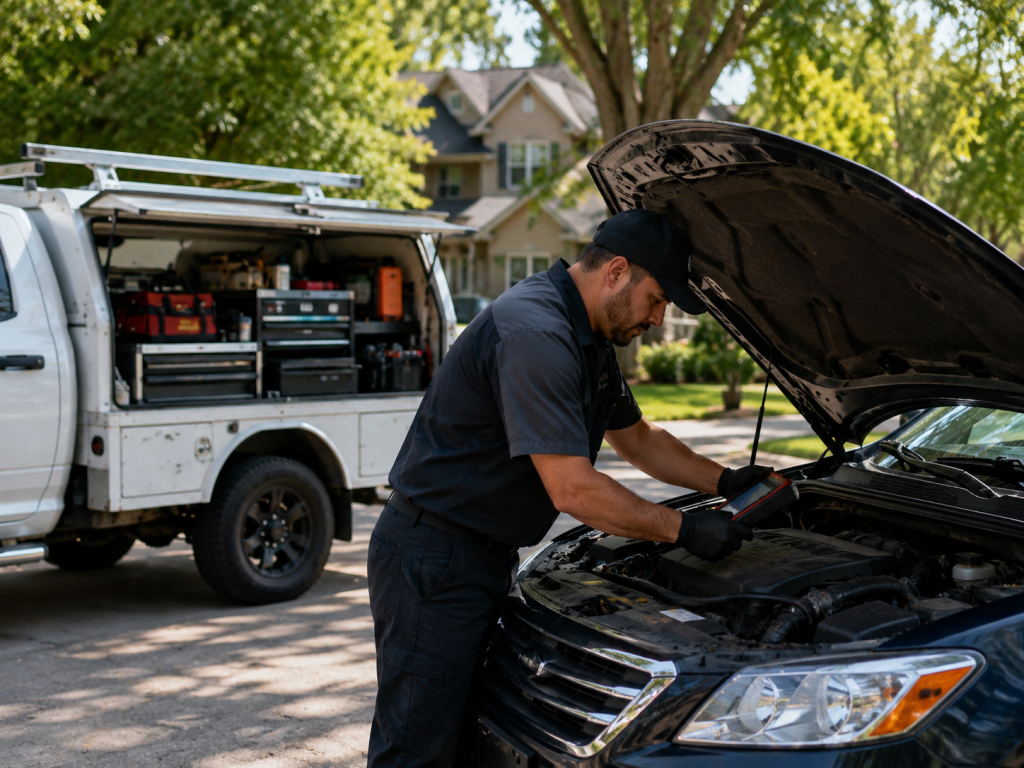
Given how much of this wear develops gradually and specifically because of the region’s persistent rain, having a technician familiar with Portland’s climate come directly to your home or workplace offers a genuine advantage. A mobile mechanic can inspect pads and rotors for the specific wear pattern this moisture cycle creates, catching thinning pads or early rotor wear before they progress into a larger repair.
We covered the broader benefits of this approach in our article on why mobile mechanics are better than traditional auto shops in Portland, which explains how convenience and local familiarity come together, particularly useful for the kind of frequent brake maintenance that a genuinely rainy climate like ours tends to require.
Stay Ahead Of What Portland’s Rain Does To Your Brakes
Portland’s near constant rain is simply part of life here, and while it cannot be avoided, understanding how it accelerates brake wear through repeated surface rust cycles gives you a much better sense of why local brake components may need attention sooner than a standard maintenance calendar suggests.
If it has been a while since your brakes were inspected, visit our homepage to learn more about our services, or reach out through our contact us page to schedule a visit at your home or office anywhere in the Portland area.
A little extra attention now can help your brakes keep up with everything Portland’s rainy season asks of them every single year.