
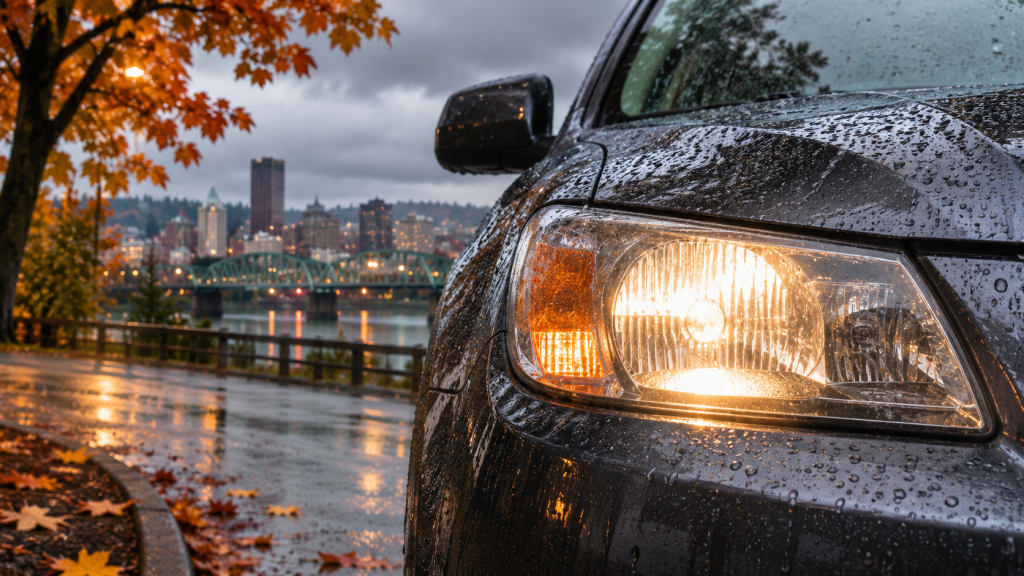
In Portland, the dark months bring early sunsets, long stretches of gray, steady rain and a lot of driving after dark. Visibility is already limited by wet roads, spray from other cars and glare off the pavement, and your headlights have to do more than at any other time of year. Yet many drivers are using headlights that are cloudy, yellowed or simply dim without realizing it, because the change happens slowly over years. By the time you notice, you may be seeing a fraction of the road you should. This guide explains why headlights cloud and dim, why it matters so much in rainy winter driving, how to tell what is wrong, what restoration involves, when a bulb or other part needs replacing and how to keep your lights in good shape. If you are looking into headlight restoration in Portland, or you have dim headlights that are worrying you, here is a plain language overview.
Why Headlights Matter More in the Rainy Season
- More hours of darkness. Many commutes now begin or end after sunset.
- Rain reduces visibility. Water on the windshield and the road scatters and absorbs light.
- Wet pavement reflects glare, which makes lane lines and hazards harder to see.
- Others need to see you. Working headlights help other drivers and pedestrians notice your car in gray, rainy conditions.
- Stopping takes longer on wet roads, so you need to see hazards sooner. Our article on rainy season driving and why Portland cars need more frequent brake checks explains how wet conditions affect stopping, and good lights are the other half of the safety picture.
Why Headlights Get Cloudy or Yellow
Most modern headlight lenses are made of clear plastic, called polycarbonate, rather than glass. The plastic is covered with a factory protective coating to resist the sun. Over time, that coating breaks down.
- Ultraviolet light. Sunlight attacks the protective layer, and once it is gone, the plastic itself starts to oxidize, turning yellow, hazy or chalky.
- Heat. Heat from the bulbs and the engine bay speeds up the process.
- Road debris and grit. Tiny pits and scratches from sand, gravel and wiper marks roughen the surface.
- Chemicals. Harsh cleaners, road treatments and some car wash products can damage the coating.
- Moisture inside the housing. If a seal fails, condensation can fog the inside of the lens, which is a different problem from oxidation on the outside.
Portland’s rainy climate does not stop this process. Gray skies still have ultraviolet light, and the sunny months in between can do plenty of damage.
Signs Your Headlights Need Attention
- Yellow, hazy or foggy lenses.
- A shorter or weaker beam than you remember, or a beam that looks dull on the road.
- Difficulty seeing road signs and lane lines at night.
- Uneven brightness, where one headlight is noticeably dimmer than the other.
- Flickering lights.
- Moisture or droplets inside the lens.
- Cracks, chips or pits in the lens.
- Beams pointing too high or too low, which can blind others or leave the road dark.
- Dim lights that get brighter when you rev the engine, which can point to an electrical or charging issue.
Cloudy Lens or Something Else?
Dim headlights are not always a lens problem. Several different issues can cause the same complaint, and fixing the wrong one wastes time.
- Aging bulbs. A bulb gradually loses brightness as it ages, long before it burns out. Replacing bulbs can make a clear difference.
- Dirty or corroded connectors and sockets. Moisture and corrosion reduce the power that reaches the bulb.
- Electrical issues. A weak battery, a failing alternator, bad grounds or damaged wiring can reduce brightness.
- Incorrect bulb type. The wrong bulb can be dim or throw light poorly.
- Misaimed headlights. Poor aim does not make lights dim, but it makes the road seem darker.
- A dirty reflector or a damaged housing. Inside the headlight, a worn reflector can send the light in the wrong direction.
What Headlight Restoration Involves
Restoration brings a hazy or yellow lens back to a clear one, using a series of steps that remove the damaged outer layer and rebuild a protective finish.
- Cleaning. The lens is washed and the surrounding paint is protected with tape.
- Sanding. Progressively finer abrasives remove the oxidized layer and smooth out scratches.
- Polishing. The lens is polished to restore clarity.
- Applying a UV protective coating. This step is critical. Without it, the lens will cloud again quickly, because the sanding removed the original protection.
- Curing and inspection. The coating is allowed to cure properly.
The quality of the result depends on how carefully each step is done, especially the final coating. A quick polish without a UV coat may look good for a short time but often fades. A technician can explain what they use and what to expect. Restoration is best for lenses that are hazy or lightly yellowed. A lens that is cracked, deeply pitted, damaged on the inside or leaking may need replacement.
Bulbs and Other Parts That May Need Replacing
- Replace bulbs in pairs. If one headlight bulb has aged enough to fail, the other is usually close behind, and matching bulbs keep the light even.
- Use the right type. Your owner’s manual lists the correct bulb for your vehicle. Do not guess.
- Handle halogen bulbs carefully. Touching the glass with bare fingers can shorten their life. Follow the instructions on the package.
- Leave high intensity discharge and some LED systems to a professional. Some of these systems use high voltage, and the parts can be sensitive and dangerous to handle.
- Check connectors, sockets and wiring and replace any that are burned or corroded.
- Replace a damaged headlight assembly if the housing is cracked or leaking, or the inside is fogged and will not dry.
- Have the aim checked after any replacement or restoration.
Check the Charging System Too
If the headlights are dim only at idle or flicker when you use other electrical items, the cause may be the battery, the alternator or a bad connection, rather than the lights themselves. A technician can test the battery and charging system and look for a voltage drop in the wiring. Our rainy season car checklist lists other items to review before the wet months, including wipers, tires and lights.
Staying Safe at Night in the Rain
- Turn on your headlights in rain, fog and low light, as local rules and your owner’s manual advise. Do not rely on daytime running lights alone at night.
- Slow down and increase following distance.
- Keep the windshield clean, inside and out, and replace worn wipers.
- Keep all lights clean and working, including brake lights, turn signals and tail lights.
- Dim your high beams for oncoming traffic and when following another car.
- Do not drive with a headlight out. Have it replaced promptly.
- Know that a lighting warning light on the dash means something needs attention. Your owner’s manual explains what each light means.
Can a Mobile Mechanic Help With Headlights?
In most cases, yes. A mobile mechanic can come to your home or workplace in Portland, inspect your headlights, check the bulbs, sockets and charging system and handle many repairs on site, including bulb replacement and many restoration jobs. Some vehicles make bulb access difficult, with parts to remove first. Certain assemblies, sealed units and systems that require aiming equipment, calibration or programming may be better done in a shop. A good technician will be clear about what can be done where you are.
How to Keep Headlights Clear Longer
- Park in a garage or shade when you can, to cut down on sun exposure.
- Wash the lenses regularly, with a mild soap and a soft cloth.
- Avoid harsh chemicals and abrasive pads on plastic lenses.
- Apply a UV protective product or sealant made for headlights, as a technician advises.
- Have bulbs tested and replaced as they age.
- Fix leaks and damaged seals promptly.
- Check the aim after suspension work or if the lights seem off.
Quick Summary
- Rainy, dark months make good headlights more important.
- Plastic lenses cloud as the UV coating breaks down, and bulbs dim as they age.
- Dim lights can also come from wiring, connectors, charging problems or poor aim.
- Restoration needs a proper UV coating, and replace bulbs in pairs.
- Leave high voltage and sealed systems to a professional.
- Many checks and repairs can be done at your home, while some need a shop.
Clear, bright headlights make every wet night drive safer. If you would like help, visit the Mobile Mechanic Pros of Portland homepage to learn more, or contact us to schedule a visit.